
Weight Loss With a Disc Bulge: My Recovery Journey
Written by Girija Rani
Fitness Advisor & Founder, Girija Fitness World
Published: August 16, 2026 · Last Updated: August 16, 2026
How I Went From Living With a Disc Bulge to Finding Fitness Again
When I was diagnosed with a disc bulge, my priority was not losing weight. My priority was healing my back and getting my life back.
I knew I needed to take my condition seriously. Instead of looking for quick solutions, I decided to focus on recovery and make changes to the way I lived every day.
My recovery started with about one and a half months of physiotherapy.
But I soon realized that simply attending physiotherapy sessions would not be enough. I needed to become more careful about how I moved, sat, stood, exercised, and managed my daily responsibilities.
That was the beginning of a journey that eventually changed not only my back health but also the way I looked at fitness.
My First Step: Starting Physiotherapy
The first important step in my recovery was beginning physiotherapy.
My physiotherapist guided me through exercises and explained that recovery was not only about what I did during a therapy session. My everyday movements and habits also mattered.
I had to learn how to protect my back while continuing with normal life.
At first, this was difficult.
I was a homemaker with household responsibilities. I still had to cook, clean, and take care of my family.
I could not simply stop everything and rest all day.
So, I had to find a balance between taking care of my family and taking care of myself.
Changing My Daily Habits
My physiotherapist advised me to avoid or reduce activities that could aggravate my symptoms, including:
- Prolonged standing
- Prolonged sitting
- Excessive forward bending
- Excessive backward bending
- Heavy lifting
Following these instructions was not always easy.
Household work often requires standing for long periods, bending, reaching, and lifting things.
So I started changing the way I performed these tasks.
Instead of standing continuously for a long time, I began taking a 10–15 minute break whenever my back needed rest.
Those small breaks made a noticeable difference in how I managed my day.
I learned that recovery was not about doing one big thing. It was about making many small changes consistently.
Using Support to Improve My Posture
During my recovery, I also became more conscious of how I positioned my body while sitting and resting.
I used a back support while sitting to help me maintain a more comfortable and supported posture.
I also used a neck-support pillow while lying on the bed, which I found helpful for maintaining comfortable neck support.
These were personal supports that I used during my recovery. They may not be suitable for everyone, so it is important to choose supportive products based on your individual needs and, when necessary, professional advice.
Here are some referenced images for supports that i used , helps me to maintain good posture…
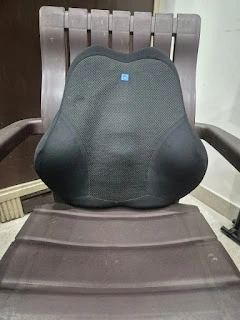
Back support for maintaining good posture while sitting.
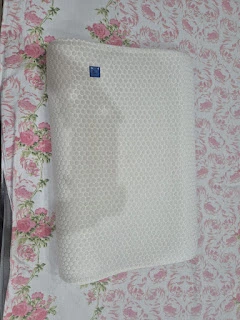
Pillow for neck support while lying on bed. This is specially designed for people having neck pain or cervical issue.
An Important Lesson I Learned About My Spine
One important lesson I learned during my recovery was that I needed to pay attention to my overall posture and movement—not only the area where I felt pain.
When you are dealing with a spinal problem, it can be easy to focus only on the painful area.
My experience taught me to become more aware of my entire body, including how I sat, stood, walked, bent, and performed household activities.
This awareness became an important part of my recovery.
Making Exercise a Daily Habit
I decided to take my recovery seriously.
I followed the instructions given to me by my physiotherapist and stayed consistent with my prescribed exercises.
I performed my exercises regularly, including at home and during my physiotherapy sessions, according to the routine I had been given.
Within a few weeks, I began noticing changes.
My pain gradually became more manageable.
Simple daily activities started becoming easier.
For the first time in a long time, I began feeling hopeful.
That feeling was incredibly important to me.
I started believing that my body could become stronger again.
Learning the Importance of Good Posture
One of the biggest lessons I learned during my recovery was the importance of being mindful of posture.
I became more conscious of how I:
- Sat
- Stood
- Walked
- Bent
- Lifted objects
- Performed household work
While sitting, I tried to maintain a comfortable and supported position rather than staying in one position for too long.
While standing, I became more aware of my posture and avoided unnecessary bending or awkward positions during household work.
I also stopped lifting heavy objects and became more careful about protecting my back.
These changes may sound small, but together they became an important part of my daily routine.
Exercise Changed the Way I Saw Fitness
Exercise Changed the Way I Saw Fitness
Before experiencing my back problem, I did not fully understand how important regular exercise and movement could be.
My recovery changed that completely.
I realized that exercise was not only about losing weight or changing the way my body looked.
For me, movement became about:
Moving with more confidence.
Building strength.
Supporting my body.
Getting back to everyday activities.
Believing in myself again.
I learned that exercise can be a valuable part of recovery when it is appropriate for the individual and performed with proper guidance.
That experience completely changed my relationship with fitness.
From Recovery to Fitness
My recovery journey eventually became the bridge between pain and fitness.
In the beginning, my only goal was to feel better and protect my back.
But as I became stronger, I started thinking differently.
I no longer wanted exercise to be something I did only when I had a problem.
I wanted it to become a permanent part of my life.
This was the point where my recovery journey slowly became my fitness journey.
I started understanding the importance of strength, consistency, mobility, healthy nutrition, recovery, and sustainable habits.
Fitness was no longer about trying to achieve a perfect body.
It was about building a body that could support me through everyday life.
A Promise I Made to Myself
As my pain gradually decreased and my body became stronger, I started believing in myself again.
I made a promise:
No matter how busy life becomes, I will not stop taking care of my health.
Exercise was no longer just another item on my daily routine.
It became a long-term commitment to myself.
I was not exercising because I wanted a perfect body.
I was exercising because I did not want to return to a life controlled by constant pain and physical limitations.
That became one of the strongest motivations in my fitness journey.
My Disc Bulge Did Not Define My Life
My experience taught me that living with a disc bulge does not necessarily mean giving up on movement or fitness.
Recovery can look different for every person.
In my case, physiotherapy, prescribed exercises, lifestyle changes, better awareness of posture, and consistency helped me make progress. I continued taking care of my back and, in my experience, my condition did not progress to the point where surgery was needed.
However, I understand that every disc problem is different. Some people may require different forms of treatment depending on their symptoms and medical situation.
That is why I believe professional guidance is important.
My story is about my experience, not a promise that everyone with a disc bulge will have the same outcome.
What My Recovery Taught Me About Weight Loss
Interestingly, my recovery journey also changed the way I thought about weight loss.
Earlier, I thought being lighter was the main goal.
Over time, I understood that weight loss should not be separated from overall health.
I began focusing more on:
- Building strength
- Eating balanced meals
- Staying active within my abilities
- Getting enough rest
- Managing stress
- Maintaining healthy daily habits
- Listening to my body
For me, sustainable fitness became much more important than quick weight loss.
I learned that the goal should not simply be to make the number on the weighing scale smaller.
The goal should be to build healthier habits that you can continue for the long term.
From a Disc Bulge Phase to a Fitness Journey
When I look back, I can see how much my life changed.
I started from a place of pain and fear.
I was worried about my back and uncertain about what the future would look like.
Then I started physiotherapy.
I changed my daily habits.
I learned about posture.
I followed my exercises.
I became more aware of my body.
I slowly became stronger.
And eventually, I discovered a completely different relationship with fitness.
What started as a recovery journey became a lifelong commitment to taking care of myself.
That is perhaps the biggest transformation of all.
My Biggest Lesson: Consistency Matters
My recovery did not happen overnight.
There were difficult days.
There were days when I felt pain, frustration, or fear.
But I kept reminding myself that progress does not always happen quickly.
Sometimes progress means being able to perform a simple daily activity more comfortably.
Sometimes it means becoming more aware of your posture.
Sometimes it means completing your exercises even when motivation is low.
And sometimes, progress simply means not giving up.
Looking back, choosing movement over fear—within my abilities and with appropriate guidance—was one of the best decisions I made.
Every Recovery Can Begin With One Small Step
My disc bulge recovery journey taught me that taking care of your health is a daily process.
You do not always need to make huge changes.
Sometimes, the smallest changes can become the foundation of a much bigger transformation.
For me, it started with physiotherapy.
Then came better daily habits.
Then consistent exercises.
Then strength.
And eventually, fitness became a part of my life.
I hope my story encourages other women who are struggling with pain, weight, or fear of exercise.
You do not have to rush.
You do not have to compare your journey with someone else’s.
Start where you are, listen to your body, follow appropriate professional guidance, and take one step at a time.
Your recovery journey may begin with one small step, but that step can change the way you see your health forever.
About the Author
[Girija Rani] – Girija Fitness World
I share my personal experiences from my weight loss, recovery, and fitness journey to encourage women to make practical and sustainable changes to their health and lifestyle. My articles are based on my personal experiences, lessons learned, and research.
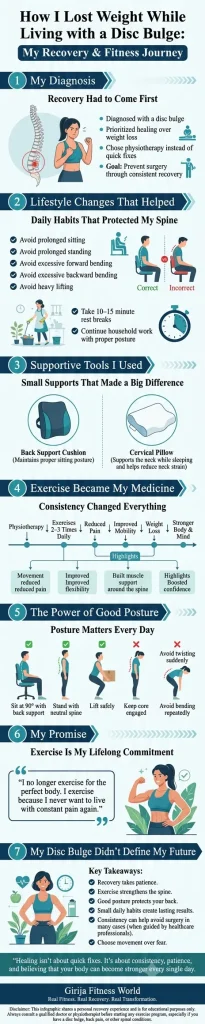
Frequently Asked Questions(FAQS)
How did I start my recovery after being diagnosed with a disc bulge?
I started with one and a half months of physiotherapy. I followed every instruction from my physiotherapist and focused on healing my back before thinking about weight loss.
What lifestyle changes helped me recover from a disc bulge?
I avoided prolonged sitting, standing, heavy lifting, and unnecessary bending. I also took regular breaks during household work and paid close attention to my posture
How did exercise help me during my recovery?
I performed my prescribed exercises two to three times every day. They helped reduce my pain, strengthened my back, and made daily activities much easier
How did my recovery journey change my view of fitness?
My recovery taught me that exercise is not just for losing weight. It helps reduce pain, improves strength, and supports long-term spinal health when done correctly
What is the biggest lesson I learned from my disc bulge journey?
I learned that recovery takes patience and consistency. Taking care of my entire spine, staying active, and exercising regularly helped me avoid surgery and regain confidence in my body.
About the Author
Girija Rani is the Fitness Advisor & Founder of Girija Fitness World. She shares practical fitness and healthy lifestyle information based on personal experience, ongoing learning and research from reliable sources.
Disclaimer: This article is for general educational purposes and is not a substitute for personalized medical advice. Individual results may vary. Read our Fitness & Health Disclaimer for more information.