
Stress Management After 40: Simple Ways to Feel Calm, Healthy and Balanced
Written by: Girija, Girija Fitness World
Published: August 31, 2026
Last Updated: August 31, 2026
Category: Women’s Health & Wellness
Life after 40 can feel very different.
You may have more responsibilities at home, at work, or with family. At the same time, your body may not respond to stress the way it did when you were younger. You may feel tired more often, find it harder to sleep, or notice changes in your mood, energy, or weight.
Stress is a normal part of life, but living with constant stress can affect your overall well-being.
That is why stress management after 40 becomes an important part of taking care of yourself.
The good news is that managing stress does not always require major lifestyle changes. Small, consistent habits can make a meaningful difference.
Why Does Stress Feel Different After 40?
As we get older, our responsibilities and lifestyle can change. Work, family, relationships, finances, household responsibilities, and concerns about health can all contribute to stress.
Women may also experience changes related to the natural stages of ageing and hormonal changes around midlife.
When stress continues for a long time, you may notice:
- Low energy
- Poor sleep
- Irritability or mood changes
- Difficulty concentrating
- Headaches or muscle tension
- Changes in appetite
- Less motivation to exercise
- Feeling mentally exhausted
This does not mean every symptom is caused by stress. If you have persistent or concerning symptoms, it is important to speak with a healthcare professional.
How to Manage Stress After 40
You do not have to completely remove stress from your life. Instead, the goal is to develop healthy ways to handle it.
Here are some simple habits that can help.
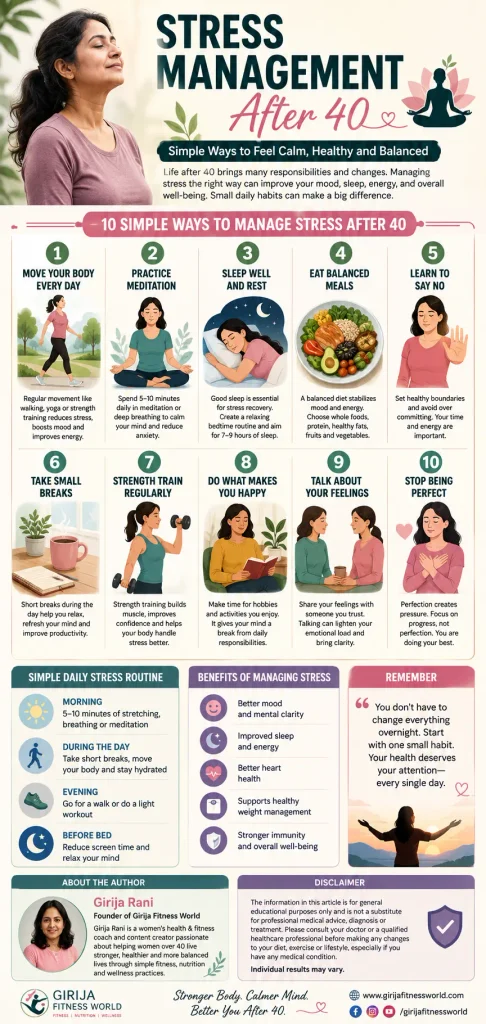
1. Make Movement Part of Your Day
Exercise is not only about losing weight or building muscle. Regular physical activity can also help you feel better mentally.
You don’t need to spend hours in the gym.
Try simple activities such as:
- Walking
- Strength training
- Yoga
- Stretching
- Dancing
- Light home workouts
Even a short walk can give you time away from daily responsibilities and help you reconnect with yourself.
If you are new to exercise, start slowly and choose activities that feel comfortable for your fitness level.
2. Practice Meditation: “meditation for women“
Sometimes the mind needs a break just as much as the body does.
Meditation can be a simple way to create some quiet time during a busy day. You can start with just five to ten minutes.
Sit comfortably, close your eyes, breathe slowly, and bring your attention back to your breathing whenever your mind wanders.
You don’t need to make meditation complicated.
The important thing is consistency.
3. Give Sleep the Importance It Deserves
When life gets busy, sleep is often the first thing we sacrifice.
But poor sleep can leave you feeling more tired and less able to deal with everyday challenges.
Try creating a relaxing bedtime routine.
You can:
- Go to bed at a consistent time
- Reduce screen time before bed
- Keep your bedroom comfortable
- Avoid heavy meals close to bedtime
- Practice slow breathing before sleeping
- Give yourself enough time to rest
Good sleep is an important part of a healthy lifestyle after 40.
4. Eat Balanced Meals
When you are stressed, it can be tempting to skip meals or depend on sugary and processed foods.
Instead, try to build balanced meals containing protein, vegetables, fruits, whole grains, healthy fats, and enough water.
Eating well does not mean following a strict diet.
Your goal should be to give your body the nutrition it needs while creating eating habits that you can maintain.
If your goal is healthy weight management, a personalized approach can be more practical than following a one-size-fits-all diet.
5. Learn to Say No
One of the simplest ways to reduce unnecessary stress is to stop saying yes to everything.
As women, we sometimes put everyone’s needs before our own.
But taking care of yourself is not selfish.
You can politely say no when something is unnecessary, overwhelming, or outside your priorities.
Setting healthy boundaries can give you more time and energy for the things that actually matter
6. Take Small Breaks During the Day
You don’t have to wait for a holiday to relax.
Small breaks throughout the day can help you mentally reset.
Step outside for a few minutes. Take a short walk. Drink your tea without checking your phone. Sit quietly and take a few deep breaths.
These little moments may seem insignificant, but they can become valuable parts of your daily routine.
7. Don’t Ignore Strength Training
Strength training becomes particularly valuable as we get older.
Building and maintaining muscle supports overall physical fitness and helps you stay strong and independent.
You can begin with simple exercises using your body weight or light weights, depending on your fitness level.
Strength training can also give you a sense of achievement and confidence.
Remember, exercise after 40 doesn’t have to be extreme. Consistency is more important than intensity.
8. Spend Time Doing Something You Enjoy
Your daily routine should not only be about responsibilities.
Make time for something that makes you happy.
It could be:
- Reading
- Gardening
- Listening to music
- Walking outdoors
- Cooking
- Spending time with friends
- Practicing yoga
- Pursuing a hobby
Doing something enjoyable can give your mind a much-needed break from everyday responsibilities.
9. Talk About What You Are Feeling
You don’t always have to handle everything alone.
Talking to someone you trust can help you feel supported.
A conversation with a friend, family member, or professional can sometimes help you look at a stressful situation differently.
If stress, anxiety, low mood, sleep problems, or other symptoms are persistent or interfering with your daily life, consider speaking with a qualified healthcare or mental-health professional.
10. Stop Expecting Yourself to Be Perfect
This may be one of the most important lessons after 40.
You don’t need to have the perfect diet.
You don’t need to complete the perfect workout.
You don’t need to manage your home, work, family, fitness, and health perfectly every day.
Some days will be productive.
Other days will be difficult.
That’s okay.
Focus on making better choices most of the time rather than trying to be perfect all the time.
Stress and Weight Gain After 40
Many women become concerned about weight gain during their 40s.
Stress can influence behaviours such as eating patterns, sleep, physical activity, and food choices. When you are tired or emotionally overwhelmed, it can become harder to maintain healthy routines.
However, weight changes have many possible causes, and it is not accurate to blame stress alone.
Instead of focusing only on the number on the weighing scale, look at your overall lifestyle.
Ask yourself:
Am I sleeping enough?
Am I moving my body regularly?
Am I eating balanced meals?
Am I making time for myself?
Am I finding healthy ways to manage stress?
These questions can help you look at your health from a bigger perspective.
Create a Simple Stress-Management Routine
You don’t need a complicated routine.
Try something as simple as:
Morning:
5–10 minutes of stretching or breathing
During the day:
Take short movement breaks and stay hydrated
Evening:
Go for a walk or complete a light workout
Before bed:
Reduce screen time and spend a few quiet minutes relaxing
The goal is not to add more pressure to your life.
The goal is to create small habits that make your life feel more manageable.
Final Thoughts
Stress is a part of life, but you don’t have to let it control your life.
After 40, taking care of your mental and physical well-being becomes even more important. Regular movement, balanced nutrition, good sleep, meditation, meaningful relationships, and time for yourself can all become part of a healthier lifestyle.
You don’t have to change everything overnight.
Start with one small habit.
Take a walk.
Sleep a little earlier.
Spend five minutes breathing quietly.
Choose a nourishing meal.
Or simply give yourself permission to rest.
Your health deserves your attention—not only when something goes wrong, but every day.
About the Author
Written by Girija | Girija Fitness World
Girija is the founder of Girija Fitness World, a women-focused fitness and wellness platform. I create simple, practical content about fitness after 40, healthy weight management, nutrition, strength training, meditation, and women’s wellness.
Disclaimer
The information provided in this article is for general educational and informational purposes only. It is not intended to replace professional medical advice, diagnosis, or treatment.
Every woman’s body, health history, lifestyle, and nutritional needs are different. The fitness, nutrition, stress-management, meditation, and lifestyle suggestions shared in this article may not be suitable for everyone.
If you have a medical condition, take medication, are pregnant or breastfeeding, or have any concerns about your physical or mental health, please consult a qualified healthcare professional before making significant changes to your exercise, diet, or lifestyle.
Never ignore professional medical advice or delay seeking medical help because of information provided on Girija Fitness World.
Girija Fitness World does not guarantee specific health, fitness, or weight-loss results. Individual results may vary depending on personal circumstances, consistency, lifestyle, and other factors.
FAQs: Stress Management After 40
1. Why is stress management important after 40?
Stress management can help you build healthier daily habits and support your overall physical and emotional well-being. Sleep, exercise, nutrition, relaxation, and social connection can all be part of a healthy stress-management routine.
2. How can I reduce stress after 40 naturally?
Start with simple habits such as regular walking, exercise, meditation, adequate sleep, balanced meals, deep breathing, hobbies, and spending time with supportive people.
3. Can stress cause weight gain after 40?
Stress can affect behaviours such as eating, sleeping, and physical activity, which may contribute to weight changes. However, weight gain has many possible causes and should not automatically be attributed to stress.
4. What is the best exercise for stress relief after 40?
There is no single best exercise for everyone. Walking, yoga, stretching, strength training, dancing, and other enjoyable activities can all be useful. Choose something appropriate for your fitness level that you can do consistently.
5. How can I manage stress when I am very busy?
Start small. Take short breaks, walk for a few minutes, practice deep breathing, organize your priorities, and avoid taking on unnecessary commitments. Small habits can be easier to maintain than major lifestyle changes.
6. When should I seek professional help for stress?
Consider seeking professional help when stress feels overwhelming, continues for a long time, affects your daily activities or relationships, or is accompanied by persistent anxiety, low mood, or significant sleep problems.